
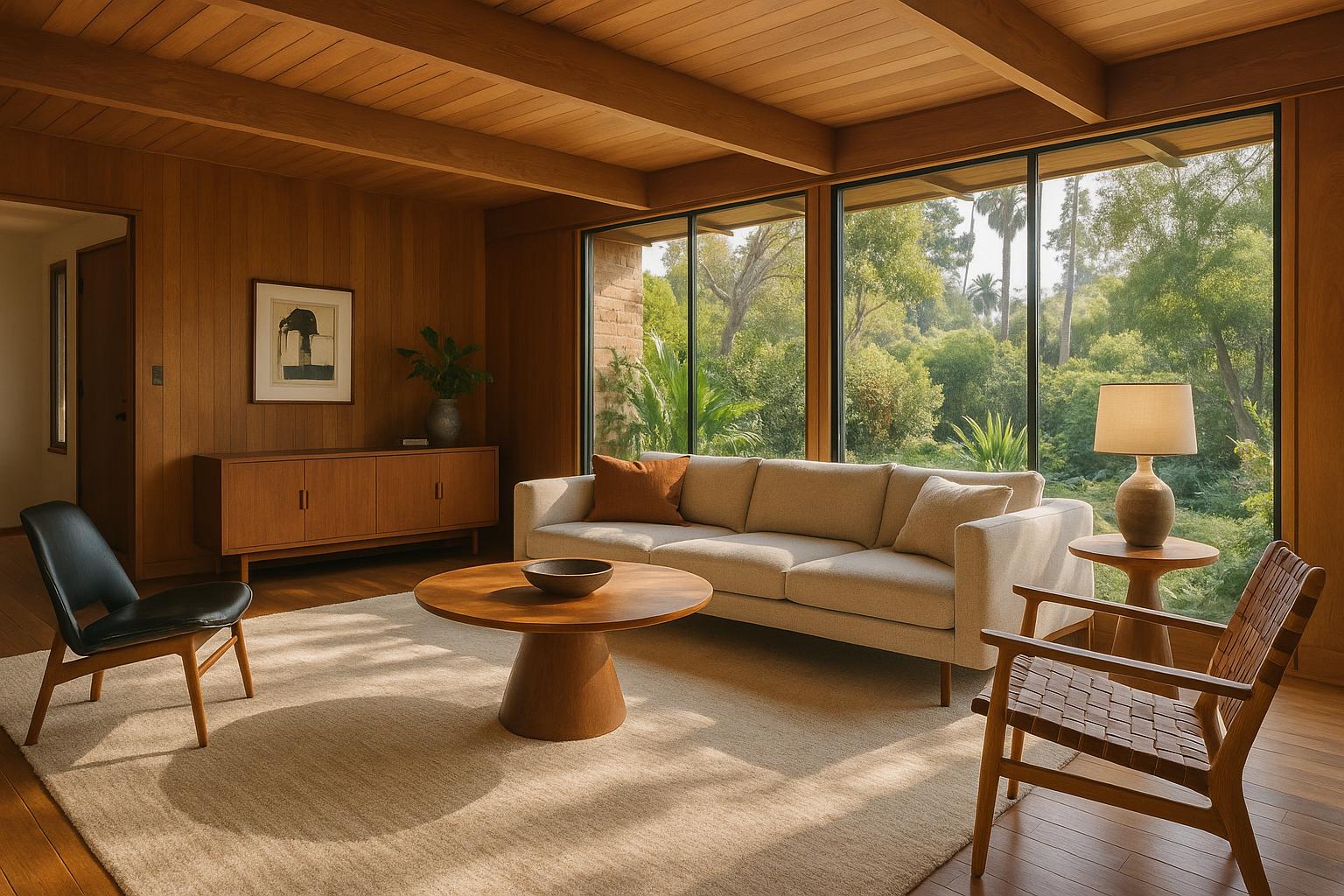
Your Home Has a Story — A Good Remodel Honors It
One of the most common concerns we hear from homeowners in La Jolla is surprisingly simple: I want to update my home, but I don't want it to lose its soul.
It's a valid worry. La Jolla is home to an incredible range of architectural styles — mid-century modern gems along Mount Soledad, Spanish Colonial Revival homes near the Village, coastal cottages in Bird Rock, and contemporary builds overlooking the cove. Each of these homes carries a distinct personality, and a thoughtless renovation can strip that away faster than you'd expect.
The good news? A well-planned remodel doesn't have to choose between modern function and original character. In fact, the best renovations find a way to strengthen both. Here's how to approach a remodel that upgrades your daily life without erasing what makes your home special.
Start by Understanding Your Home's Architectural DNA
Before you pick out countertops or browse tile samples, take a step back and study your home. What era was it built in? What style does it represent? What are the defining features — the roofline, the window shapes, the materials, the proportions?
This isn't just an academic exercise. Understanding your home's architectural DNA gives you a framework for every design decision that follows. For example:
- Mid-century modern homes are defined by clean lines, open floor plans, post-and-beam construction, and a strong connection to the outdoors. A remodel should preserve those sight lines and that sense of openness.
- Spanish Colonial Revival homes feature arched doorways, stucco walls, clay tile roofs, and warm interior tones. Introducing sleek, ultra-modern finishes can clash with these elements unless done very carefully.
- Craftsman bungalows are all about handcrafted details — built-in cabinetry, exposed woodwork, tapered columns. These details are worth preserving and even replicating in new spaces.
When you know what you're working with, you can make intentional choices rather than accidentally undermining the design language of your home.
Modernize the Systems, Respect the Surfaces
Here's a principle that serves almost every character-preserving remodel well: update what's behind the walls aggressively, and update what's visible thoughtfully.
Many La Jolla homes, particularly those built in the 1950s through 1970s, have outdated plumbing, electrical systems, and insulation. These are upgrades that dramatically improve comfort, safety, and energy efficiency — and nobody sees them. This is where you should invest without hesitation.
When it comes to visible changes — flooring, cabinetry, fixtures, trim — that's where you want to slow down and be deliberate. Ask yourself with each choice:
- Does this material feel like it belongs in this home?
- Does this finish complement the existing architectural details, or compete with them?
- Am I adding something timeless, or chasing a trend that will feel dated in five years?
A kitchen remodel in a 1960s ranch home, for instance, can incorporate modern appliances and soft-close cabinetry while using warm wood tones and simple hardware that echo the home's original aesthetic. You get a kitchen that works like it was built yesterday but feels like it's always been there.
Don't Fight the Floor Plan — Work With It
Open-concept living is popular, and for good reason. But not every home was designed for it, and not every wall should come down. Some older homes have a rhythm to their layout — a sequence of rooms that creates a sense of discovery and intimacy that a wide-open floor plan simply can't replicate.
Instead of defaulting to the biggest possible opening between rooms, consider more subtle changes. A wider doorway, a half-wall, or a strategically placed pass-through can improve flow and sightlines without demolishing the spatial character of the home.
When a more dramatic floor plan change is warranted — and sometimes it absolutely is — a skilled designer will find ways to maintain proportions and transitions that feel natural rather than forced.
Match Materials to the Era, Not Just the Trend
Material selection is where character preservation gets practical. Here are a few guidelines that work well across many of the home styles found in La Jolla and surrounding neighborhoods like Del Mar and Pacific Beach:
- Wood species matter. If your home features original oak or walnut millwork, try to source matching or complementary species for new built-ins or cabinetry.
- Tile tells a story. Hand-painted Talavera tile belongs in a Spanish-style home. Large-format porcelain slabs suit a contemporary build. Choose tile that speaks the same language as your architecture.
- Hardware is a detail that punches above its weight. Swapping out every piece of hardware for brushed nickel because it's popular can subtly shift the entire feel of a home. Consider oil-rubbed bronze, unlacquered brass, or matte black depending on your home's style.
- Stone and countertop choices should complement, not dominate. A dramatic waterfall island looks stunning in a modern home but can overwhelm a cozy Craftsman kitchen.
Work With a Remodeler Who Listens Before They Build
Perhaps the most important factor in preserving your home's character through a remodel is choosing a contractor who genuinely cares about it. Not every remodeling company approaches projects this way. Some are focused on speed and volume, applying the same formula to every home regardless of its style or history.
At Cedar Creek Foundation, we start every project with a detailed conversation about what you love about your home — not just what you want to change. We believe that understanding a home's strengths is just as important as identifying its shortcomings. That perspective shapes everything from our initial design concepts to our final material selections.
Whether we're renovating a bathroom in a 1970s University City split-level or adding an ADU to a Carmel Valley property, we approach each project as a unique challenge with its own set of architectural cues to respect.
The Bottom Line: Character and Comfort Aren't Opposites
A remodel should make your home work better for the way you live today. But it should also feel like your home when it's done — not a generic showroom, not a replica of something you saw online, but a space that reflects both your taste and the home's original spirit.
If you're considering a renovation in La Jolla and you want to make sure your home's character survives the process, we'd love to talk. Reach out to Cedar Creek Foundation for a consultation, and let's find the right balance between honoring what's there and building what's next.